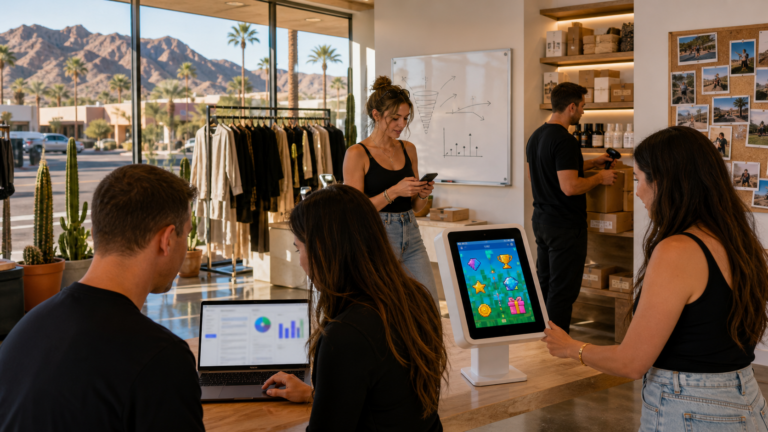
The evolving landscape of digital advertising and search is reshaping how businesses reach and engage with their customers. Recent major developments – from DoorDash’s acquisition of Instacart to Google’s AI-powered search overhaul slowing down, and the rise of multimodal search optimization – are signals that local small and mid-sized companies must pay attention to. At the same time, innovations in connected TV (CTV) advertising and social commerce platforms like TikTok Shop reveal new frontiers for targeted marketing. For businesses in Phoenix and its surrounding communities, understanding these trends is critical for gaining a competitive edge and maximizing marketing ROI.
Key Industry Shifts and Trends Affecting Phoenix and Scottsdale
1. Consolidation in Mobile and Retail Media Platforms
DoorDash’s acquisition of Instacart for $17 billion highlights a significant consolidation in the mobile app-driven last-mile fulfillment and retail media space. Both companies have developed lucrative advertising businesses, with DoorDash surpassing $1 billion in ad revenue in 2024 and Instacart generating over $300 million in Q3 alone. This merger merges different consumer purchase behaviors – from big weekly grocery shopping to rapid meal and convenience orders – under one umbrella, creating a broader ecosystem for advertisers.
Such consolidation signals that marketers can expect increasingly integrated platforms offering refined targeting based on rich consumer purchase data. It also underscores the growing importance of mobility media as a vital advertising channel.
2. Google’s AI Search Overhaul Faces Challenges Amid Slowing Ad Revenue Growth
Google’s investment in AI-powered search features, including its AI Mode, is aimed at creating more engaging, multistep search experiences that generate valuable upper-funnel marketing opportunities. Despite this, Q3 2026 saw a notable slowdown in advertising revenue growth – search ad revenue rose by 12%, down from 15% the previous year, and YouTube ads grew by only 9% compared to 15% before.
Competition is intensifying as ChatGPT and Meta develop their own AI-driven search and shopping assistants. Google’s new Universal Shopping Cart aims to capture more of the omnichannel commerce experience, but monetization of AI search remains a work in progress. This shift signals a more complex advertising environment where traditional search ads must share ground with emergent AI-driven commerce experiences.
3. Multimodal Search and Image Optimization Are Becoming Paramount for Phoenix and Scottsdale
Search engines now accept inputs beyond text – images, voice, and combinations thereof are powering a new era of multimodal search. Technologies like Google Lens allow users to search using images directly, changing how customers discover products.
For businesses, this means that traditional SEO tactics focused on keywords must evolve. Properly optimized images – with crawlable URLs, alt text, structured data, and fast loading – become crucial in capturing search visibility. Additionally, ensuring images are not blocked by robots.txt or paywalls and using image sitemaps directly impacts discoverability.
4. CTV Advertising Advances Through AI Optimization Engines
Connected TV advertising is rapidly gaining sophistication. Platforms like Tatari have launched AI-powered engines (Tatari Max) that optimize which ads are served to individual viewers based on an array of data points such as device IDs and shopping behavior.
This technology allows brands to identify the best creative for specific audience segments, improving advertising efficiency and conversions. Early adopters report significant uplifts in purchase rates and site visits when using AI-optimized CTV ads. As CTV viewership grows, this channel offers a compelling alternative or complement to traditional digital and linear TV advertising.
5. Rise of Social Commerce via TikTok Shop
Brands like Disney are investing heavily in TikTok Shop’s e-commerce platform with seasonal events like Super Brand Day, integrating exclusive products and influencer-driven storytelling. This comes amid growing consumer trust in social commerce and a surge in TikTok Shop sales, forecasted to reach $23.4 billion in 2026.
The trend shows how social media is no longer just for awareness but also direct conversions. Large and small businesses alike can leverage TikTok’s tools and creator ecosystems to engage consumers in immersive shopping experiences.
What These Trends Mean for Phoenix Area Businesses
The Importance of Integrated Mobile and Retail Media
Phoenix-based retailers and restaurants should monitor local and national consolidation trends, as combined platforms can offer more powerful advertising products that target customers during distinct shopping journeys – from weekly grocery trips to impulse convenience orders. Leveraging these emerging retail media opportunities can boost local digital visibility and increase conversions.
Adapting SEO and Content Strategy for AI and Multimodal Search
Businesses must audit their websites to ensure images are fully optimized for multimodal search by confirming crawlability, adding relevant alt text, and implementing structured data markup. Real estate agents, boutiques, manufacturers, and others who rely on visual search should especially prioritize this, as users increasingly begin product discovery with images or voice commands.
Exploring AI-Driven CTV Advertising
Phoenix businesses targeting consumer segments that have shifted media consumption habits toward streaming should consider investing in AI-optimized connected TV campaigns. Local brands selling lifestyle goods, services, or entertainment can benefit from platforms like Tatari Max, which bring data-driven ad placement to smart TVs and streaming devices.
Capitalizing on Social Commerce and Influencer Marketing
Retailers and consumer brands in the region can capitalize on TikTok Shop’s growing influence by planning for key seasonal events, creating exclusive offers, and partnering with local or regional influencers for authentic storytelling. As younger demographics become primary consumers, social commerce integration will be crucial for driving holiday and year-round sales.
Mitigating Risks Around AI Search Accessibility
With emerging challenges such as AI platform access blocks (e.g., OpenAI’s Aura Safety Check), Phoenix-area businesses should actively monitor AI agent crawling access to their websites. Being unintentionally blocked can result in loss of traffic and visibility on platforms like ChatGPT, harming reputation and downstream sales.
Actionable Steps for Phoenix, Scottsdale, Tempe, Mesa, Chandler and Gilbert Businesses
-
Audit and Enhance Retail and Mobility Platform Presence
Evaluate your current listings and advertising efforts on platforms like DoorDash and Instacart. Explore opportunities for sponsored placements or enhanced product visibility as these platforms integrate.
-
Optimize Images and Website for Multimodal Search
Use tools like Google Search Console to check image indexing performance. Ensure image URLs are stable, descriptive alt text is present, and structured data is implemented. Avoid lazy loading that hides images from crawlers.
-
Test and Launch AI-Optimized CTV Campaigns
Identify CTV platforms that offer AI-driven ad targeting. Start pilot campaigns using AI ad engines to understand your best-performing creatives and audience segments.
-
Plan Social Commerce Campaigns Around Key Events
Align marketing calendars with TikTok Shop events such as Super Brand Day. Create exclusive product bundles or launch limited-edition items to drive urgency.
-
Monitor AI Agent Access to Your Digital Assets
Work with IT and SEO professionals to check for any inadvertent blocks preventing AI agents from crawling your site. Develop a protocol to address these issues swiftly.
Future-Proofing Your Local Marketing Strategy
As AI, integrated commerce, and new media channels continue to evolve, Phoenix businesses face a dynamic landscape where consumer behaviors and technology intersect more than ever. Those that seize opportunities to optimize for AI-driven search, harness advanced ad targeting on CTV, and engage in emerging social commerce platforms will stand out.
Meanwhile, staying vigilant about backend accessibility to AI agents and remaining agile in marketing spend allocation will protect against hidden traffic losses. Ultimately, blending data-driven innovation with localized knowledge will empower companies to thrive amid constant change.
Headline: AI-Powered Ad Targeting, Multimodal Search, and Platform Consolidation: What Phoenix Businesses Need to Know Now